AI agents with a human in the loop
Intelligent systems that stay under human control.
I’m Preetham — I build agentic and on-device AI, and keep a running log of the research frontier from NVIDIA, Anthropic, and beyond.
- 15
- projects
- 28
- tracked papers
- on-device
- & agentic
Most of my work sits at one of two edges — agents with real autonomy that still ask before they act, and on-device models that keep sensitive data on the device. This site is both the portfolio and the notebook.
Things I’ve built
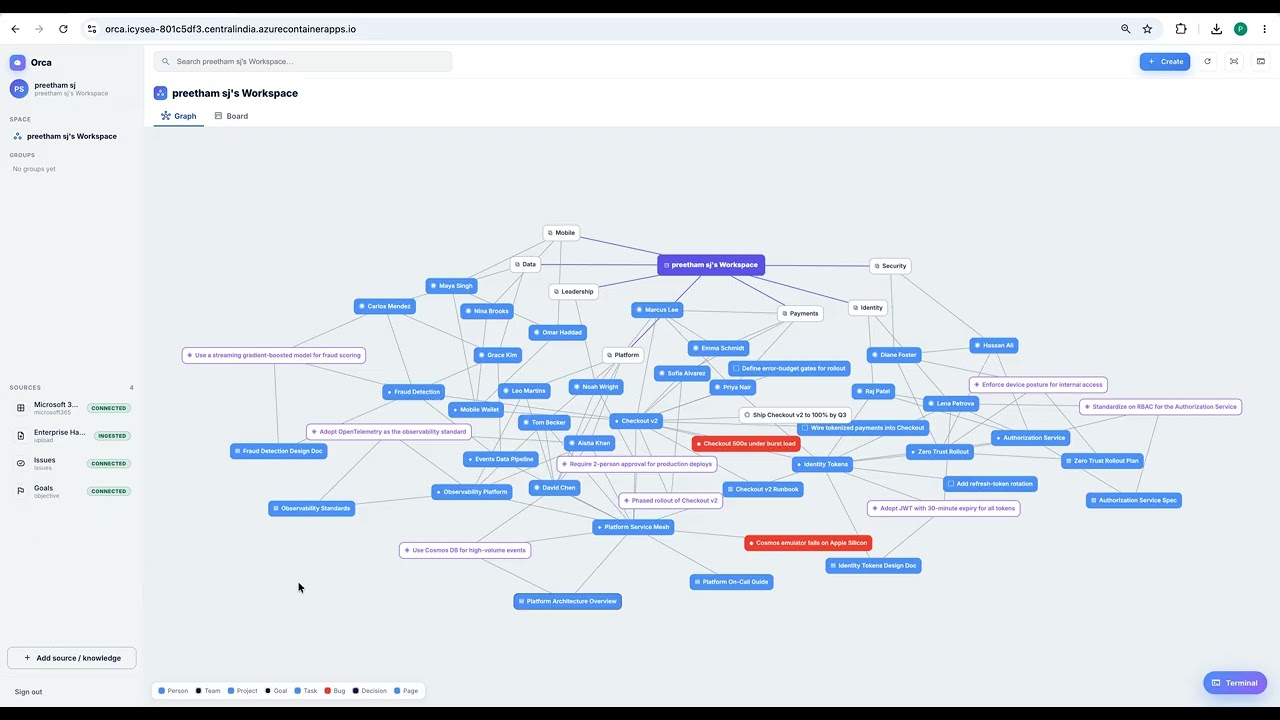
Orca
A teamwork graph for AI agents.
Most enterprise AI bolts a chatbot onto a pile of documents and does single-shot retrieval — so it can’t answer the relational questions that actually run a business: “Who do I need to talk to to unblock the Checkout launch?”
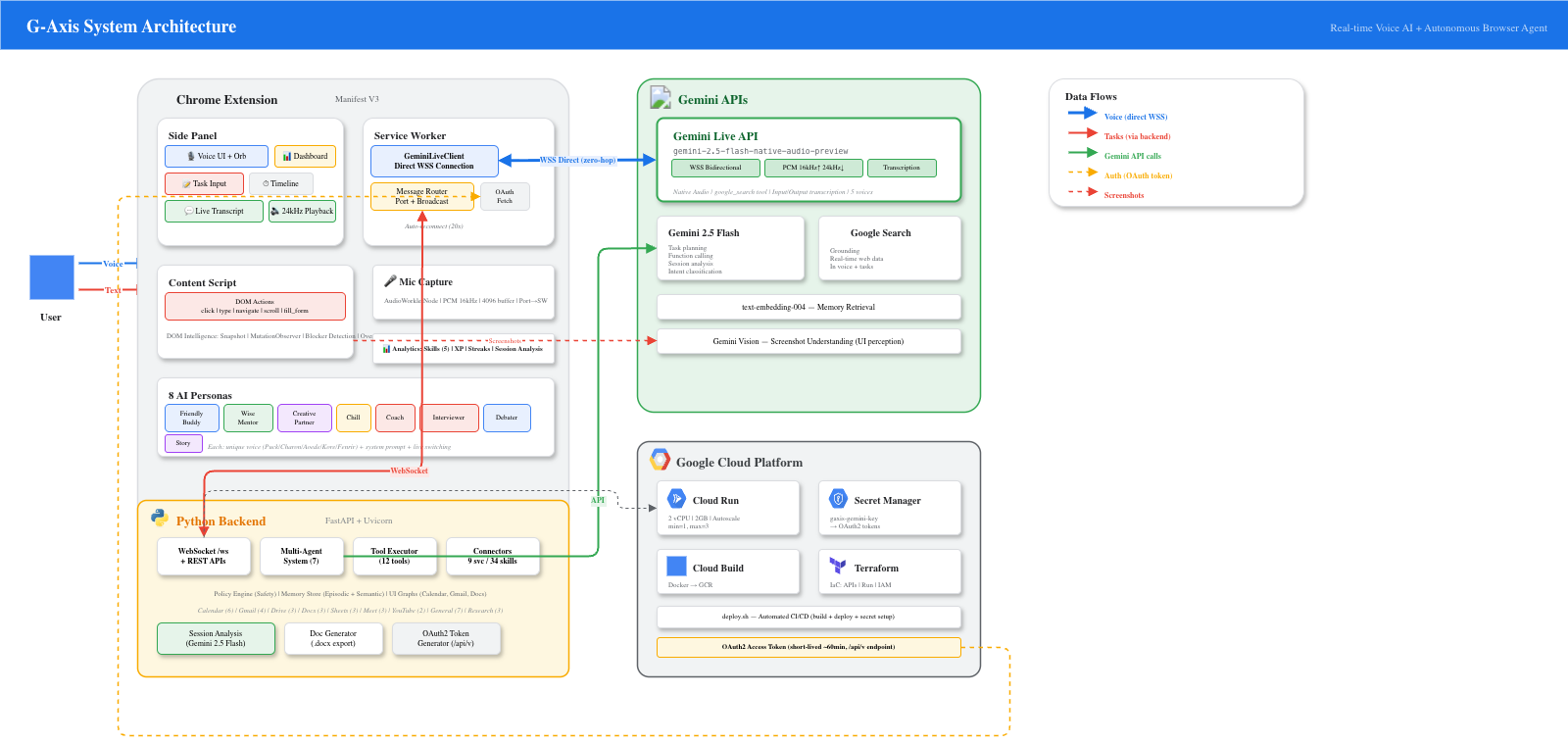
G-Axis
Your browser already works. G-Axis makes it intelligent.
AI chatbots can answer questions but can’t *do* anything in your browser, and “AI browsers” force you into a separate app — losing your logins, extensions, and habits.
Weave
Per-viewer product placement, decided on your device.
Ad personalization today either interrupts you or surveils you — per-viewer targeting *requires* shipping your profile to an ad network, the exact data you’d never want to hand over.
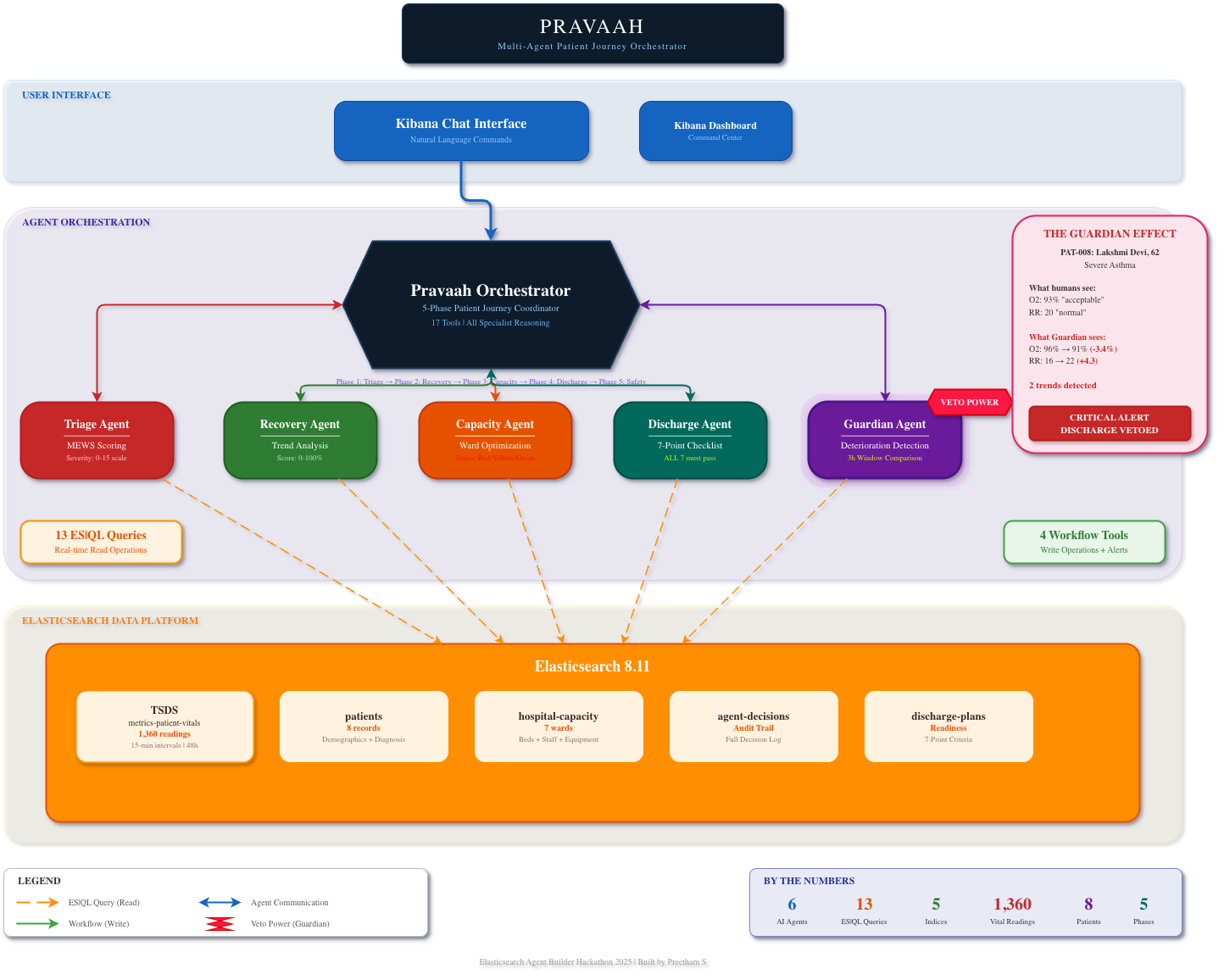
Pravaah
A multi-agent patient-journey orchestrator.
Hospital care spans dozens of decisions across fragmented systems. Critical patterns get missed when nothing connects the dots — an O₂ saturation slipping 96%→91% over four hours triggers no alarm, but should.
The frontier, tracked
Claude Sonnet 5 — Anthropic’s most agentic mid-tier model
Anthropic’s newest Sonnet, built to be its most agentic yet — planning, using browsers and terminals, and running autonomously at a level that previously required more expensive models, at performance close to Opus 4.8 but lower cost.
Claude Fable 5 — frontier model for long-running agents
Anthropic’s most capable widely-released model, positioned for long-running agents: always-on adaptive thinking, a 1M-token context window, and 128K output tokens, generally available across the Claude API and major clouds.
NVIDIA debuts the Nemotron 3 family of open models
NVIDIA’s newest open family for agentic AI uses a hybrid Mamba-Transformer MoE architecture with up to 1M-token context. Nemotron 3 Nano (~31.6B total / ~3.2B active) posts ~4× the throughput of Nemotron 2 Nano while beating GPT-OSS-20B and Qwen3-30B on several benchmarks.
Mistral 3 and Mistral Large 3
Mistral’s most capable model to date — a sparse MoE with 41B active / 675B total parameters, trained on 3,000 H200 GPUs and released under Apache 2.0 — shipped alongside the dense Ministral 3 family (3B/8B/14B) in base, instruct, and reasoning variants.
Notes from the build
Reasoning got cheap: what the RL wave actually changed
DeepSeek-R1 showed that reasoning can be trained with pure reinforcement learning. A year later, the follow-up work made it efficient too.
Privacy as architecture: the on-device LLM turn
When the model never leaves the device, 'we don't store your data' stops being a policy you have to trust and becomes a property of the system.
MCP won: how agent tooling standardized in eighteen months
The Model Context Protocol went from an Anthropic experiment to a Linux Foundation standard with 10,000+ servers. Here's why that matters for anyone building agents.
Building something at the edge of agents?
I’m always up for a conversation about human-supervised autonomy and on-device AI.
Get in touch